Small Business Legal Checklist: What to Review as You Grow
August 31, 2026

 Your Business Is Growing. Here’s What You Need to Review Now

In January, you had two contractors and a manageable client list. By August, you have an employee, a larger contract, a new service, and revenue running 40% ahead of last year. This is where a small business legal checklist starts. I review those changes through the LIFT: Legal, Insurance, Financial And Tax Systems™.


First, take that in. You built this. You made the sales calls, delivered the work, hired help, and spent your Time, Energy, Attention, and Money, your TEAM, making the business more valuable. That deserves more than a passing nod.


Then a client dispute exposes language in the agreement that still describes the old service. Your insurance broker learns about the employee months after the hire. Your accountant discovers the new revenue model at tax time.


Nothing went wrong because the business grew. The gaps appeared because the systems underneath it did not grow with it.


Business Growth Planning Starts With What Changed

A $300,000 business with one owner and two contractors does not carry the same obligations as a $1.5 million company with employees, equipment, intellectual property, and a multi-year lease. The larger company has more value to protect and more people depending on it.


That does not mean every milestone requires a complete legal rebuild. It means business growth planning should begin with one question: What is different today from the last time someone reviewed the full company?


The answer may be a hire, partner, loan, location, service, or contract. Each change creates a ripple across all four systems.


The bottom line: The problem is never that you grew. It is that the systems underneath you did not.


One Hire Changes All Four LIFT: Legal, Insurance, Financial And Tax Systems™


Legal


The title on the agreement does not decide whether a worker is an employee or independent contractor. The IRS looks at behavioral control, financial control, and the type of relationship. State tests may be stricter.


Your agreement should also address confidentiality, ownership of work product, duties, compensation, and what happens when the relationship ends. If the document describes independence while the day-to-day work shows control, the label will not solve the classification problem.


Insurance


An employee can trigger workers' compensation requirements and change employment-practices exposure. The worker also needs to know what happens after an injury, termination, or wage dispute.


Coverage purchased for a contractor-only company may not protect the company you operate today. The policy application, payroll estimate, and actual workforce must tell the same story.


Financial


A $70,000 salary does not cost only $70,000. Payroll taxes, benefits, equipment, software, training time, and management capacity belong in the decision.


The hire also changes your monthly cash needs. With a 13-week cash forecast, you can see the payroll obligation beside expected collections instead of hoping the bank balance holds.


Tax


Employee status brings withholding, payroll deposits, reporting deadlines, and employer tax obligations. A classification error can produce back taxes, penalties, interest, and claims for benefits the worker should have received.


The human cost matters too. A misclassified worker may lose access to unemployment protection, workers' compensation, overtime, and the employer share of Social Security and Medicare.


The bottom line: One person joined your company, but all four systems changed.


Two Growth Moves That Reach Far Beyond the Deal


A partner and a new offer look like separate wins, but each changes obligations far beyond the deal itself.


A New Partner Connects the Business Plan to the Family Plan


A new owner changes voting rights, profit distributions, decision-making authority, and what happens when someone wants to leave. It also raises harder questions about disability, death, valuation, and who has the right to buy an ownership interest.


If you die, does your family inherit the company interest? Can the surviving owner buy it? How is the price calculated, and where does the money come from? An operating agreement, buy-sell agreement, insurance policy, valuation method, and personal estate plan must support the same result.


Nobody is looking at all four at once unless that role is assigned. A LIFTed Business Advisor coordinates the business and family picture with the company's attorney, insurance professional, accountant, and financial advisor.


The bottom line: A partner changes more than ownership percentages. The decision reaches your family and theirs.


A New Service Changes More Than the Website


You launch a new offer and customers buy it. That is a win. But your old client agreement may not describe the new scope, payment schedule, cancellation rights, intellectual property, or limits of responsibility.


The service may also collect different customer data, use outside contractors, create a new professional exposure, or carry a different sales-tax treatment. If the margin is thinner, the financial model changes too.


This is why I ask founders what they are doing now that they were not doing during the last review. The answer shows where the legal, insurance, financial, and tax systems may have fallen behind.


The bottom line: A new offer quietly becomes four connected planning decisions.


The Bigger the Company, the More Coordination Matters


As revenue and value rise, old coverage, agreements, and advisor silos become easier to outgrow.


More Value Requires a New Measurement


Suppose your company grew from $750,000 to $1.2 million in annual revenue. Insurance limits chosen for your smaller company may no longer match the contracts you sign, the payroll you carry, or the loss you could absorb.


The same issue appears in your buy-sell funding. A policy purchased when your ownership interest was worth $400,000 cannot fully fund a $900,000 buyout. Your agreement, valuation method, and funding have to be reviewed together.


For a founder, the business may be the family's largest asset. Its value supports income, retirement, employees, customers, and the future you are building at home. Protecting the company is family wealth stewardship.


The bottom line: Coverage and agreements sized for the old business do not automatically protect the new one.


The Four-Advisor Gap


You may already have an attorney, insurance broker, accountant, and financial advisor. That is good. The gap is coordination.


Your attorney may not know what insurance you purchased. Your broker may never see the buy-sell agreement.

Your accountant may hear about the new service after the tax year closes. Your financial advisor may not know the company guaranteed a loan.


You assume someone is seeing the connected picture. Often, each professional sees only one slice.


My role as a LIFTed Business Advisor is to keep the four systems pointed at the same business and family goals. I do not replace the other professionals. I make sure decisions do not disappear between them.


The bottom line: A strong advisor team still needs someone connecting the work.


Turn What Changed Into a Q4 Plan


Q4 is the moment to turn this year's changes into a short list of coordinated priorities.


The Most Useful Question Before Q4


Before Q4 begins, write down the three biggest ways the business changed this year. Use facts: five new employees, a 40% revenue increase, a $500,000 credit line, a second location, or a new partner.


Then review the TEAM you need for the next quarter. How much Time do you need to protect? Where is your Energy being drained? Which issue needs your Attention before year-end? How much Money must remain available for payroll, taxes, debt, and growth?


You do not need to review everything at once. Start with the changes that altered obligations, exposure, cash needs, ownership, or family wealth.


The bottom line: You do not need to inspect everything. You need to notice what changed.


Your Small Business Legal Checklist for Growth


For each major change in your business, review these four areas:

Legal

  • Do your client, employment, contractor, and ownership agreements reflect how the business operates now?
  • Are worker classifications supported by the actual working relationships?
  • Do your operating and buy-sell agreements address the company’s current ownership and value?
  • Does your personal estate plan coordinate with your business agreements?

Insurance

  • Do your coverage limits match your current revenue, payroll, services, property, and contractual obligations?
  • Did hiring create workers’ compensation or employment-practices needs?
  • Would key-person or disability coverage provide enough money under today’s numbers?
  • Does the funding behind your buy-sell agreement match the company’s current value?

Financial

  • Does your 13-week cash forecast account for payroll, taxes, debt, and slower collections?
  • Have you calculated the full cost of every new hire?
  • Do new services produce the margins you expected?
  • Could the company absorb the obligations created by its leases, loans, and guarantees?

Tax

  • Are payroll deposits, withholding, and reporting handled correctly?
  • Did a new product, service, employee, or location create new tax obligations?
  • Does your compensation and entity structure still fit the business?
  • Have your legal and financial decisions reached your tax advisor before year-end?

The bottom line: A checklist cannot make the decisions for you. It can show you where the business you operate today has outgrown the systems created for the business you used to have.


This Is What Stewardship Looks Like for a Founder


You built the business to create something: freedom, security, jobs, impact, family opportunity, or a company that can outlast you. Legal work is not the goal. Insurance is not the goal. Tax savings are not the goal.


The goal is alignment. Your Legal, Insurance, Financial, and Tax systems should support what the business is meant to make possible.


That requires ongoing attention because the company keeps changing. Stewardship means caring for what you built without slowing the growth that gives it value.


The bottom line: Stewardship is keeping all four systems pointed at the same goal.


What You Can Do Right Now


List the three biggest changes in your business since January. For each one, ask what changed legally, what changed in insurance, what changed financially, and what changed for tax.


In a complimentary, one-hour LIFT Business Breakthrough™ Session, I review your business and personal picture, identify where the four systems no longer match the company you operate, and map the next priorities in order.


You already built something worth planning for. Now give it infrastructure that can carry the next stage.


Schedule your complimentary, one-hour LIFT Business Breakthrough Session today:


calendar.trustamdlaw.com/widget/booking/JDAbqicl45eEE3dRRmpb


This article is a service of AMD LAW, a Personal Family Lawyer Firm. We don’t just draft documents; we ensure you make informed and empowered decisions about life and death, for yourself and the people you love. That's why we offer a Life & Legacy PlanningⓇ Session, during which you will get more financially organized than you’ve ever been before and make all the best choices for the people you love. You can begin by calling our office today to schedule a Life & Legacy Planning Session.


The content is sourced from Personal Family Lawyer® for use by Personal Family Lawyer firms, a source believed to be providing accurate information. This material was created for educational and informational purposes only and is not intended as ERISA, tax, legal, or investment advice. If you are seeking legal advice specific to your needs, such advice services must be obtained on your own, separate from this educational material.

© 2026

August 31, 2026
SECURE Act IRA Trust Rules: What to Review in 2026
August 24, 2026
You Made a Will. Here's What It Can't Do.
August 24, 2026
A will won't keep your business running. Here's what business owners actually need: buy-sell agreements, incapacity plans, and coordinated LIFT coverage.
August 17, 2026
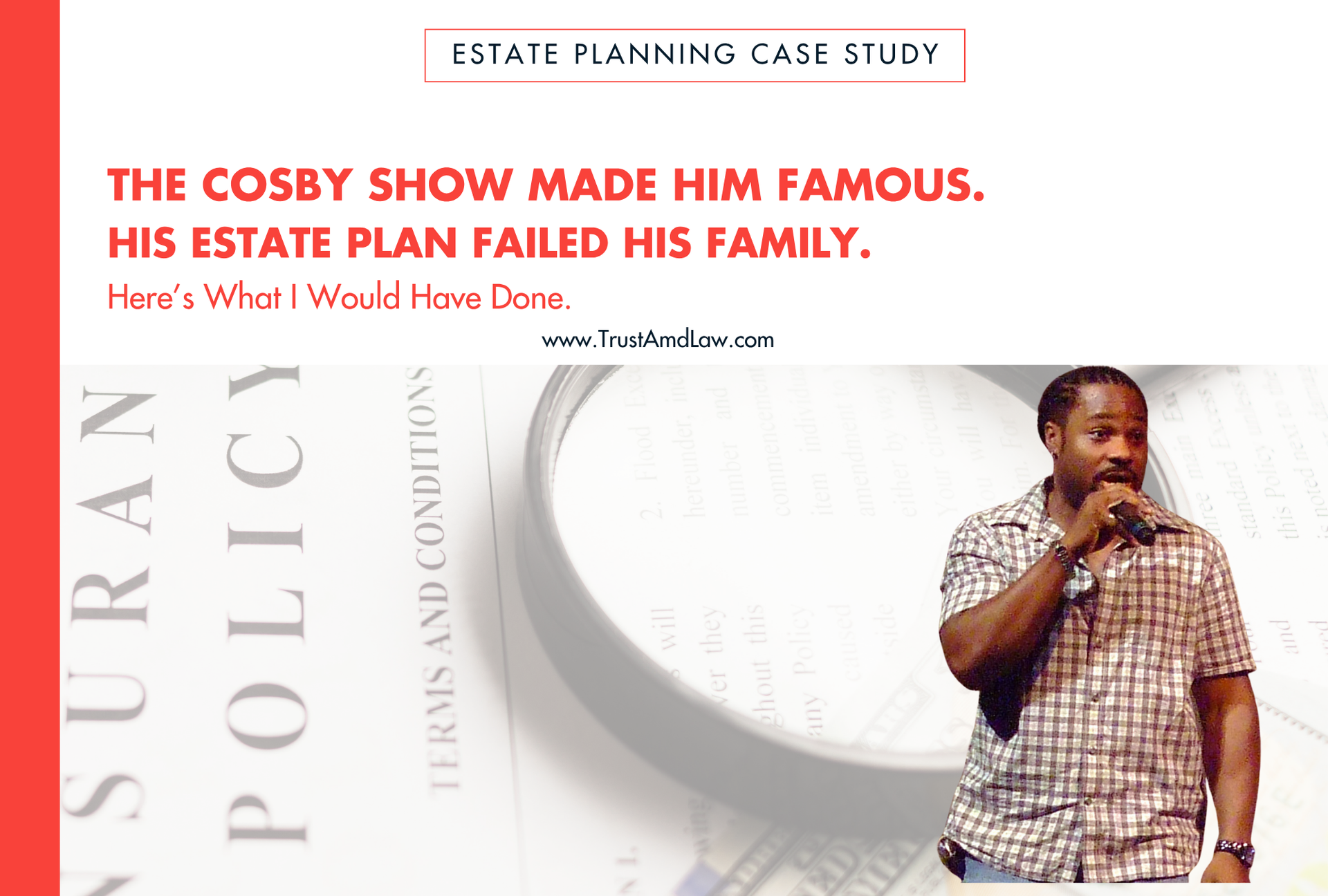
The Cosby Show star Malcolm-Jamal Warner left $1.2M in unfulfilled premarital promises. Here’s what a Personal Family Lawyer® firm would have done differently.
August 15, 2026
Most Business Owners Hit Q4 With Gaps They Don't Know About. Here's the Checklist That Changes That.
August 10, 2026
A Will Alone Won't Protect Your Family
August 10, 2026
Your Business Needs More Than a Will
August 1, 2026
There's a phrase most of us remember from decades past: "Friends don't let friends drive drunk." It was simple, direct, and it worked, because it reframed a difficult conversation as an act of friendship, not judgment. The same logic applies to estate planning. For most of us, our friends are among the most important people in our lives. For some, they're chosen family: the people who show up, who know everything, who would be on the other end of that phone call if something went wrong. And yet we rarely think about what it means to love someone that much and say nothing while they go unprotected. Here's the truth: According to Caring.com's 2025 Wills and Estate Planning Study, only 24 percent of Americans have a will. That means roughly three out of four people don't even have the most basic estate planning document in place. So yes, statistically, someone you love is probably unprotected. And if something happens to them, the people they love most may be left scrambling to pick up the pieces. Courts may need to get involved. Family members may disagree. Assets can be delayed or frozen. And the people left behind may have to make decisions with no clear record of what your friend or loved one actually wanted. And you, watching from the outside, will find yourself thinking: I knew they didn't have a plan. I could have said something. That's a different kind of grief. Watching someone you love go through the hardest time of their life and knowing you had a chance to make it easier. When someone is on your heart and you know they need to plan, how do you bring it up in general conversation or over dinner without sounding morbid, preachy, or like you're bracing for someone to die soon? Why People Don't Plan (It's Not What You Think) Before you can have this conversation well, it helps to understand why so many smart, caring, responsible people still don't have an estate plan. It's not because they don't care about their families. They care deeply. It's because: They think it's only for the wealthy. (It isn't.) They assume they'll get to it "someday." (Someday has a habit of not arriving.) They find the topic uncomfortable to think about. Let alone discuss. They've never had a lawyer they actually trusted enough to call. That last one matters more than most people realize. Planning isn't just paperwork. It's one of the most personal conversations a person can have. It asks them to sit with the reality of their own death, the possibility of incapacity, the future of their children, and what they actually value when it comes down to it. That's not a conversation most people are willing to have with a stranger. But with someone they trust? It changes everything. And that's where you come in. You're not their lawyer. But you might be the person they trust enough to finally take this seriously. You might be the reason they make the call. The bottom line: Nobody is too young, too broke, or too busy to need a plan. They just haven't had someone they love tell them that yet. What Happens Without a Plan Grief is hard enough. But grief with no plan is something else entirely. If someone you love doesn't have a plan and something happens to them, here's what their family will actually face: Someone is sitting at the kitchen table at midnight, surrounded by file folders they've never opened, trying to figure out if there's a life insurance policy, and if there is, where it is. They're calling a number they found on an old bank statement, not sure if the account is even still open. They're texting a sibling: Do you know if he had a 401k somewhere? I can't find anything. They're doing all of this while their kids are asleep down the hall, and they haven't eaten since this morning, and they still have to call the school tomorrow to explain why the kids won't be in. None of it was written down. None of it was planned. And every hour they spend searching is an hour they're not just grieving. They're managing a crisis their person left them to figure out alone. Their person's estate goes through probate, a public court process that can drag on for months or years. The assets are frozen during that time. If they had minor children, a judge decides who raises those children based on state law, not what they actually wanted. And if they had not died but had become incapacitated from a stroke, an accident, or sudden illness, their family may have no legal authority to make medical or financial decisions without going to court first. None of this is hypothetical. And the hardest part? Almost all of it is completely preventable. The bottom line: The consequences of no plan fall on the people left behind. That's why this conversation is worth having. How to Bring It Up The hardest part is starting. But remember: the alternative is watching someone you love face the kitchen table at midnight. That's harder. Here are a few ways in: After a life event. When a friend gets married, has a baby, buys a house, or loses a parent, it's completely natural to say, "Hey, have you thought about getting your estate plan done? Now's a really good time." Life events are the most common reason people finally take action. Share your own experience. If you've done your plan, say so. "I finally did our estate plan and I can't believe how long I put it off. I feel so much better knowing it's done." Coming from someone they know and trust, that's an invitation, not a lecture. Lead with someone else's story. A news story, a family you've heard about, a situation where someone didn't have a plan and the people left behind paid the price. You don't have to make it personal. Sometimes someone else's story opens the door just as well. Ask the question they haven't asked themselves. "If something happened to you tomorrow, who would make decisions for you? Would everyone agree on what you'd want?" Most people have never sat with that question. It lands very differently than, "Have you done your estate plan?" Use the month. August is National Make a Will Month. That's a built-in, low-pressure reason to bring it up: "Hey, did you know August is National Make a Will Month? Have you guys ever done anything with that?" No one feels cornered by a month. The bottom line: You don't need a perfect script. You just need one honest question or one personal story to open the door. Referring a Friend Is an Act of Love The clients who refer friends are almost always the ones who've been through it themselves. They know what it felt like to finally have a plan in place, and they want that peace of mind for the people they love. For some of them, the person they're referring isn't just a friend. It's chosen family. The person who showed up when no one else did. The one who would be devastated, and completely unprepared, if something happened. When one of my clients refers a friend to me, they're not just passing along a name. They're giving someone they love access to a planning relationship, one where we can look at the people, assets, decisions, and details before the family is in crisis. Through a Life & Legacy Planning® process, I take time to build a clear picture of exactly where a family stands, what's at risk, and what needs to be in place. For families with minor children, that includes a Kids Protection Plan® naming the right people and making sure the legal authority is actually in place. It also includes powers of attorney, health care directives, an asset inventory, beneficiary review, and a clear record of who should make what decisions and when. That's not something you get from a document website. It happens in conversation, built over time, with someone who knows your family. And when something does happen, your family knows exactly who to call. The bottom line: When something happens, and someday something will, your friend's family will know exactly who to call. That's what you gave them when you made the referral. Pass It On Friends don't let friends drive drunk. And friends don't let friends go without an estate plan. That's not just a clever parallel. It's the heart of why this work matters. The people in your life who would drop everything for you deserve to have someone drop this in their inbox. If this brought someone to mind, send them this article or invite them to schedule a Life & Legacy Planning Session with me. You don't have to convince them. You only have to open the door. Someday, they will thank you for it. What You Can Do Right Now Three out of four people don't have a plan. If someone you love is in that group, the most caring thing you can do is help them take the first step. As a Personal Family Lawyer®, I help families build a Life & Legacy Plan that reflects who they are, what they have, and who they love. August Is National Make a Will Month If this article brought someone to mind, now is the right time. This month, I'm inviting new clients to schedule a complimentary 15-minute discovery call: a quick conversation to find out exactly where you stand and what needs to be in place. Not someday. This month. Forward this article, share the link, or book a call for someone you love. Either way, someone you love gets protected before it matters. Schedule a complimentary 15-minute discovery call here: calendar.trustamdlaw.com/widget/booking/JDAbqicl45eEE3dRRmpb This article is a service of AMD LAW, a Personal Family Lawyer Firm. We don’t just draft documents; we ensure you make informed and empowered decisions about life and death, for yourself and the people you love. That's why we offer a Life & Legacy PlanningⓇ Session, during which you will get more financially organized than you’ve ever been before and make all the best choices for the people you love. You can begin by calling our office today to schedule a Life & Legacy Planning Session. The content is sourced from Personal Family Lawyer® for use by Personal Family Lawyer firms, a source believed to be providing accurate information. This material was created for educational and informational purposes only and is not intended as ERISA, tax, legal, or investment advice. If you are seeking legal advice specific to your needs, such advice services must be obtained on your own, separate from this educational material. © 2026

August 1, 2026
Most business owners spend a lot of energy thinking about what they're building. Revenue, clients, team, growth. What most don't think about, at least not until something forces the conversation, is what happens to everything they've built if they die. And more specifically: what happens to the debt? If you've taken on a business loan, a line of credit, a commercial lease, or an SBA loan to grow your business, that money doesn't just disappear when you do. Understanding what happens to business debt at death isn't morbid. It's essential planning. And for most entrepreneurs, the answer is more complicated and more personal than they expect. This is one of the places I help business owners look before a crisis: not just what the entity says on paper, but what the loan documents, guarantees, insurance, and family realities actually create. First: It Depends on How Your Business Is Structured The most important factor is how your business is set up. Sole proprietorship: If you operate as a sole proprietor, there is no legal separation between you and your business. Your business debts are your personal debts. They go into your estate, and your estate is responsible for satisfying them before your heirs receive anything. LLC or corporation: In theory, these structures protect your personal assets from business liabilities. The business's debts belong to the business, not to you personally. When you die, those obligations don't automatically transfer to your family. But here's where it gets complicated. The bottom line: Business structure matters, but it doesn't tell the whole story. The type of debt you carry can override the protection your structure is supposed to provide. Personal Guarantees Change Everything Many business owners have signed personal guarantees on their business debt and forgotten, or never fully understood, what that means. A personal guarantee means that you, as an individual, have agreed to repay the loan if the business can't. It's standard for SBA loans. It's common for commercial real estate. It's frequent for business lines of credit, especially for newer or smaller businesses. When you die with personally guaranteed debt, that guarantee becomes a claim against your estate. Your heirs don't become personally responsible for the debt just because they are your heirs. But creditors can make claims against your estate, enforce collateral, or pursue anyone who co-signed the obligation. That debt may reduce or consume what your family inherits before they ever see it. The question to ask yourself today: Do I know which of my business debts I've personally guaranteed? If you're not sure, find out. It's one of the most important pieces of information you can have as you build your overall plan. The bottom line: A personal guarantee turns a business debt into a claim against your estate. If you've signed one, it needs to be in your plan. What Happens to the Business Itself? The debt question doesn't exist in isolation. When a business owner dies, the business doesn't automatically pause. Contracts still run. Employees still need to be paid. Clients still expect delivery. And someone needs to be in charge. Here's what that looks like in practice. A solo owner dies with a $150,000 business line of credit, a commercial lease, and a personal guarantee on equipment financing. The LLC may still owe the money, and the estate may also be exposed because of the guarantees. Meanwhile, the spouse is trying to figure out payroll, client obligations, bank access, and whether the business can even keep operating. Nobody planned for this moment. Nobody knows where the documents are. Nobody has the authority to act quickly. If you have a business partner, what happens is likely governed by your operating agreement, assuming you have one, and assuming it addresses this scenario. Many don't. If you're a solo owner, the business may fall into your estate and be subject to probate, which can freeze operations for months while the courts sort out who controls what. For a business with employees, active clients, or ongoing obligations, that delay can be devastating. If a business owner dies, the family needs someone who already knows the plan, where the documents are, who has authority, and what debt has to be addressed first. Without that, decisions get made by whoever happens to be there, under pressure, in grief. The bottom line: Without a succession plan, your business could be frozen in court while your family, your employees, and your clients wait. The Surviving Spouse Problem If your spouse co-signed on business debt, they may be liable after your death regardless of how the business is structured. This catches many families off guard. The exposure can take several forms: a co-signed credit line, a personally guaranteed SBA loan or lease, collateral tied to a family home or shared account, or in some states, community property rules that create exposure depending on when the debt was incurred. A surviving spouse may find themselves fielding creditor calls, managing an estate, and trying to keep a business running, all at once, while grieving. The bottom line: Don't assume your spouse is protected. Get clear on what they'd actually be facing before something happens. What a Real Plan Addresses The goal isn't to avoid debt. The goal is to make debt intentional, documented, insured where needed, and coordinated with your family plan. This is what I work through with business owner clients, mapped to the four areas of the LIFT - Legal, Insurance, Financial & Tax® framework that need to work together: Legal: entity structure, operating agreement, buy-sell agreement, succession authority, and a review of every loan document and guarantee so you know exactly what you've signed and what your estate would owe. Insurance: life insurance or key-person coverage structured to fund debt repayment, a buyout, or a business transition. The right amount, owned the right way, with the right beneficiary. Financial: a full debt inventory, cash flow review, collateral exposure, payroll and vendor obligations, and estate liquidity so your family isn't forced to sell the business under pressure. Tax: payroll tax, sales tax, income tax, and estate tax exposure where applicable. Business owners often have more tax complexity at death than they realize. Most business owners have a personal estate plan or a business plan. Very few have both, and fewer still have them designed to work in tandem. That's the gap I close as a LIFTed Advisors™ attorney. The bottom line: Your business and your personal estate can't be separated, so your plan can't treat them separately. The Real Risk Is Waiting The business owners who are most exposed aren't the ones who made bad decisions. They're the ones who never got around to making any decisions. The loan documents are signed, the business is running, and the planning just didn't happen yet. That's a risk you can close relatively quickly with the right advisor. The work you've done to build your business deserves a plan that makes sure it actually survives you. What You Can Do Right Now Your business debt doesn't have to become your family's problem. As a Personal Family Lawyer® firm and LIFTed Advisors attorney, I look at your full business and personal picture through the LIFT - Legal, Insurance, Financial & Tax® systems, identify where the gaps are, and map out what needs to happen and in what order. Schedule a complimentary, one-hour LIFT Business Breakthrough™ Session and let's find out what this means for your business: calendar.trustamdlaw.com/widget/booking/JDAbqicl45eEE3dRRmpb This article is a service of AMD LAW, a Personal Family Lawyer Firm. We don’t just draft documents; we ensure you make informed and empowered decisions about life and death, for yourself and the people you love. That's why we offer a Life & Legacy PlanningⓇ Session, during which you will get more financially organized than you’ve ever been before and make all the best choices for the people you love. You can begin by calling our office today to schedule a Life & Legacy Planning Session. The content is sourced from Personal Family Lawyer® for use by Personal Family Lawyer firms, a source believed to be providing accurate information. This material was created for educational and informational purposes only and is not intended as ERISA, tax, legal, or investment advice. If you are seeking legal advice specific to your needs, such advice services must be obtained on your own, separate from this educational material. © 2026

July 27, 2026
If your baby was born on or after January 1, 2025, the federal government has set aside $1,000 for your child. The account is available now. Contributions opened on July 4, 2026. And most families have not yet taken the step to claim it. The account is called a Trump Account. It was created by the One Big Beautiful Bill Act, signed into law in 2025, and it is one of the most significant new financial tools for young families in years. A seed investment that grows tax-advantaged for up to 18 years can become something meaningful by the time your child is ready to use it. Here is what you need to know, and what you should do next. What Is a Trump Account? A Trump Account is a tax-advantaged investment account created for a child. For every U.S. citizen born between January 1, 2025 and December 31, 2028, the federal government has committed to making a one-time $1,000 deposit, provided the child has a valid Social Security number. Beyond that government seed contribution, parents, grandparents, and other family members can contribute up to $5,000 per year. Before making personal contributions beyond claiming the $1,000 deposit, it's worth a call with your attorney first. There are unsettled regulatory questions about the gift tax treatment of family contributions that are still being worked out, and the right answer for your family depends on your specific situation. Employers can contribute up to $2,500 per year through a qualified written plan. If you own your own business, that means you could potentially contribute both as a parent and as an employer, for a combined $7,500 per year in additions to the account. The government's $1,000 does not count against either limit. The account is structured as a type of individual retirement account for the child. The account grows through stock market returns on a tax-deferred basis, meaning no taxes on the growth while the funds are invested, but ordinary income tax applies when distributions are eventually taken. The funds cannot be withdrawn before the child turns 18. At 18, the account converts to an IRA the young adult controls directly, though distributions before age 59½ are subject to income tax and a 10% early withdrawal penalty. That 18-year window is significant: a $1,000 deposit growing at a modest 7 percent average annual return becomes roughly $3,400 at maturity, without any additional contributions. Add even moderate contributions from family members over those years and the account can represent a meaningful head start. How the account is invested matters, and that is an active decision you make when you open it. Trump Accounts are not limited to babies born in the 2025 to 2028 window. Any child age 17 or younger with a valid Social Security number can have an account opened on their behalf. The free $1,000 pilot contribution, however, is only available for children born in that four-year window. The bottom line: A Trump Account is a federally seeded, tax-advantaged investment account for your child. The $1,000 is yours to claim. The contributions you add on top grow alongside it for up to 18 years. How to Open One To open a Trump Account, families can file a one-page Form 4547 with the IRS or use the online portal at TrumpAccounts.gov. Contributions may begin as of July 4, 2026. The form walks through basic information about the child, including their Social Security number. If your child does not yet have a Social Security number, you will need to obtain one before completing the filing. To claim the government's $1,000 pilot contribution, you must make an affirmative election on the form: check the box in Part III, line 7. That election is what triggers the deposit. The account can be open and active without it, but without that election, no pilot contribution follows even though the account is up and running. Once the account is open, you will need to make an investment selection. If you do not actively choose how the funds are invested, they default into a government-managed option. Most families will want to review the available investment choices and make an active decision rather than accepting the default. The bottom line: The process takes minutes either way. Start at TrumpAccounts.gov or ask your tax preparer about Form 4547. Do not stop at opening the account: elect the $1,000 in Part III and make an investment selection. What This Has to Do with Your Family's Plan Here is where most of the coverage on Trump Accounts stops, and where the real planning conversation begins. A Trump Account is a new asset in your child's name. Like every asset your family holds, it needs to fit into a coordinated plan. Several questions matter from an estate planning perspective. What happens to this account if something happens to you before your child turns 18? The account needs a successor custodian, the person who takes over management of the funds if you are no longer able to do so. That person needs to be named intentionally, not left to chance or a court's discretion. Without a named successor custodian, a court may be the one deciding who manages the account on your child's behalf. Courts do not know your family the way you do, and the process takes time that your child's finances should not have to wait on. How does this account interact with the rest of your estate plan? If you have a will or trust, your child's Trump Account may not be covered the way you think. Investment accounts with designated custodians operate outside a will. The account also does not automatically flow into a trust you have set up for your child's benefit. If you want the account managed according to the terms of a trust you have established, that needs to be specifically coordinated with your attorney. It does not happen by default. Does this account change how you are thinking about what you will leave your child? For many families, the Trump Account is the first real conversation starter about building generational wealth. It does not replace a complete plan, but it can begin one. If grandparents or other family members are already contributing to 529 accounts or other savings vehicles for your child, the Trump Account adds another layer. The question of how all of it fits together, what each account is for, who contributes to which one, and what happens to each if circumstances change, belongs in a complete family financial and estate plan. And for families with more than one child, or children from a previous relationship: whose money is this, legally? Who manages it? What happens if you and your co-parent separate? These are questions worth answering now, not later. If you do not have a complete plan in place yet, you are not alone. Many young families encounter the Trump Account before they have a will, a named guardian, or a trust. That is not a problem. It is a useful entry point. The account gives you a concrete reason to put the full structure in place now. The bottom line: A $1,000 account for your child is a starting point, not a plan. The question is what you build around it, and whether the people you trust know exactly what to do if something happens to you. What You Can Do Right Now As your Personal Family Lawyer® firm, I help young families build a Life & Legacy Plan that is designed for where your life actually is, not just what the default legal rules would produce. The Trump Account is a good reason to start that conversation now. Schedule a complimentary 15-minute discovery call and let's make sure your family's plan is in place: calendar.trustamdlaw.com/widget/booking/JDAbqicl45eEE3dRRmpb This article is a service of AMD LAW, a Personal Family Lawyer Firm. We don’t just draft documents; we ensure you make informed and empowered decisions about life and death, for yourself and the people you love. That's why we offer a Life & Legacy PlanningⓇ Session, during which you will get more financially organized than you’ve ever been before and make all the best choices for the people you love. You can begin by calling our office today to schedule a Life & Legacy Planning Session. The content is sourced from Personal Family Lawyer® for use by Personal Family Lawyer firms, a source believed to be providing accurate information. This material was created for educational and informational purposes only and is not intended as ERISA, tax, legal, or investment advice. If you are seeking legal advice specific to your needs, such advice services must be obtained on your own, separate from this educational material. © 2026